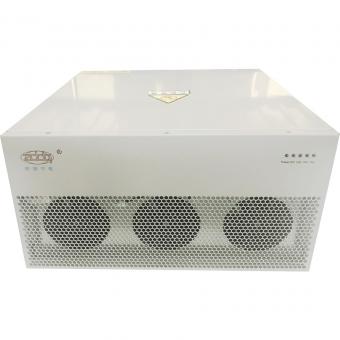
Análisis de las razones de la disminución del factor de potencia en el lado de la alimentación después de que el "AHF "solo realiza filtrado de armónicos:AHF solo realiza filtrado de armónicos:
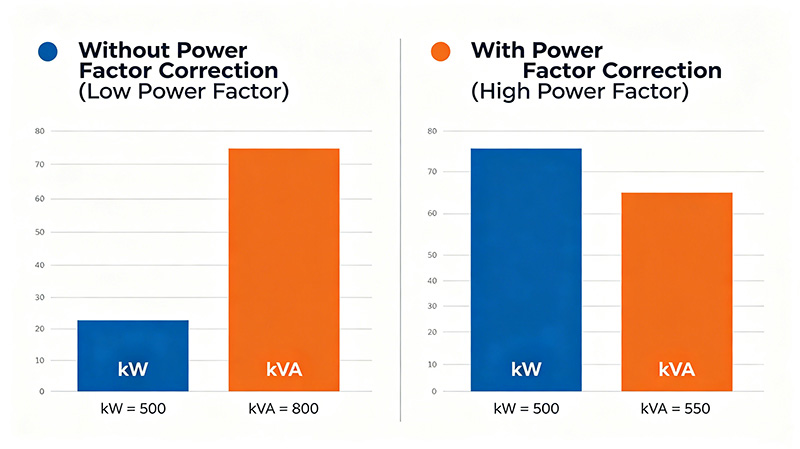
I. El aumento de la potencia aparente total conduce naturalmente a una disminución del factor de potencia general.
Factor de potencia λ = P/S. La potencia activa P está determinada únicamente por la potencia activa fundamental; los armónicos no contribuyen. Después del filtrado, la potencia reactiva fundamental permanece sin cambios, pero las corrientes armónicas solo se transfieren al AHF y circulan con la carga, dejando una pequeña cantidad de corriente armónica residual en el lado de la alimentación.
Corriente total = corriente fundamental + corriente armónica. La potencia aparente total S aumenta, mientras que la potencia activa permanece sin cambios, lo que resulta en un factor de potencia general más bajo.
II. Solo filtrado de armónicos, sin compensación de potencia reactiva fundamental.
El AHF solo activa el modo armónico y no compensa la potencia reactiva fundamental inductiva/capacitiva:
1. La potencia reactiva inductiva existente de motores, transformadores, etc., se mantiene por completo, y la propia potencia reactiva fundamental tiene un cosφ bajo.
2. Si hay un banco de capacitores en el sitio, no existe efecto de compensación para la potencia reactiva capacitiva adelantada, y el defecto de potencia reactiva fundamental permanece sin cambios.
III. Pérdidas de potencia activa del propio sistema AHF
Los IGBTs, reactores, disipadores de calor y placas de control consumen continuamente una pequeña cantidad de potencia activa, mientras que la red suministra una parte adicional de esta potencia activa perdida. En comparación con la relación de potencia activa de la carga, esta disminuye ligeramente, lo que resulta en una leve caída del factor de potencia.
IV. Componentes de potencia reactiva introducidos por los armónicos
Las corrientes armónicas y las tensiones armónicas tienen un desfase, generando potencia reactiva armónica. Esta potencia reactiva no contribuye a la potencia activa, sino que solo ocupa la capacidad de la red, reduciendo aún más el factor de potencia general.
V. La mala coordinación del gabinete de capacitores agrava el deterioro
El gabinete de capacitores LC existente compensación de capacitores tiene baja impedancia para los armónicos. Después del filtrado, la corriente armónica circulante impacta en los capacitores, generando potencia reactiva armónica circulante. La relación de potencia reactiva fundamental está desequilibrada, con potencia reactiva adelantada/atrasada superpuesta, empeorando el factor de potencia.
En resumen: eliminar simplemente los armónicos sin ajustar la potencia reactiva fundamental, combinado con el aumento aparente de armónicos, las pérdidas del dispositivo y la potencia reactiva armónica, en realidad reduce el factor de potencia en el lado de la alimentación en comparación con antes de la implementación del sistema AHF.