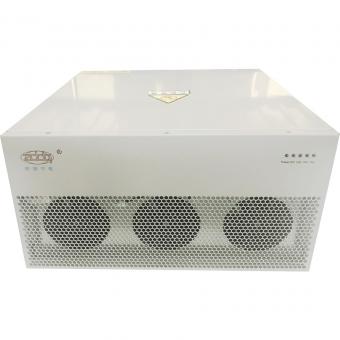
banco de condensadores para corrección del factor de potencia
Apr 10,2026
Aplicación: El inteligente
compensación de potencia reactiva
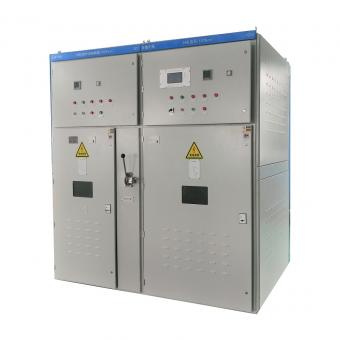
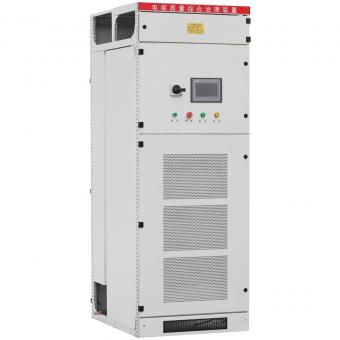
El banco de condensadores actúa como un "especialista en ahorro de energía" en los sistemas eléctricos. Sus funciones principales incluyen:
(1) Compensar las pérdidas de potencia reactiva en la red, mejorar el factor de potencia y evitar las sanciones impuestas por las autoridades eléctricas por un bajo factor de potencia;
(2) Reducir las pérdidas en las líneas y mejorar la eficiencia del suministro de energía de la red;
(3) Estabilizar el voltaje de la red, proteger los equipos eléctricos y extender la vida útil de los dispositivos.
Componente principal:
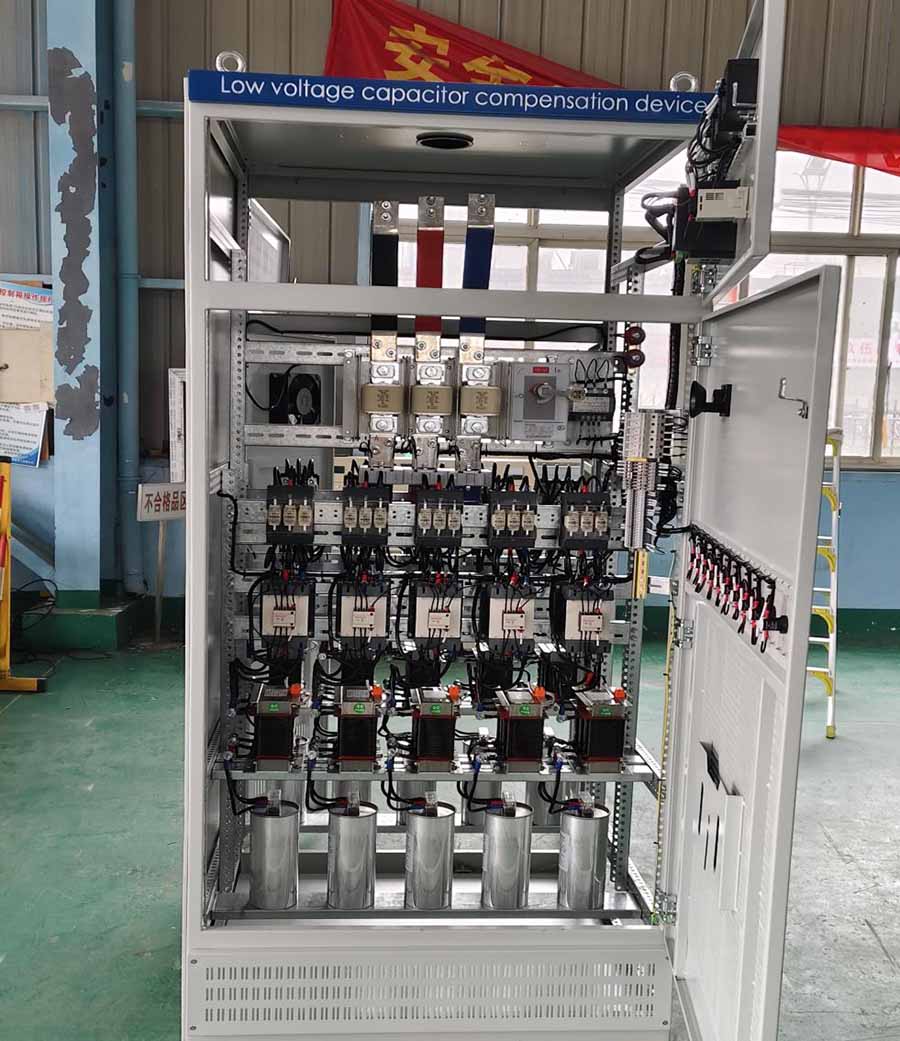
(1) Controlador inteligente: Actúa como el "cerebro" del gabinete, monitoreando continuamente parámetros como el factor de potencia, el voltaje y la corriente de la red eléctrica, y conmutando automáticamente en
bancos de condensadores
Banco de condensadores: La unidad de almacenamiento de potencia reactiva. Se activa según las instrucciones del controlador para reponer la potencia reactiva de la red eléctrica. Dispositivo de conmutación: Generalmente utiliza tiristores o interruptores compuestos para lograr una conmutación sin impacto de los condensadores, evitando sobretensiones y daños en los equipos.
(2) Fusible/Disyuntor: Proporciona protección contra sobrecorriente y cortocircuitos para garantizar la seguridad del equipo.
(3) Reactor: Suprime las corrientes de sobretensión de cierre y la red
armonía
, protegiendo condensadores.
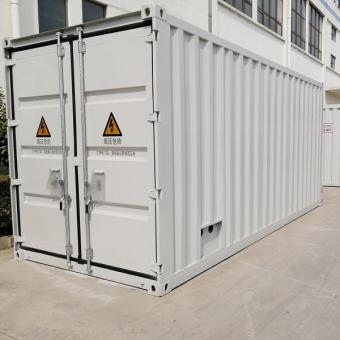
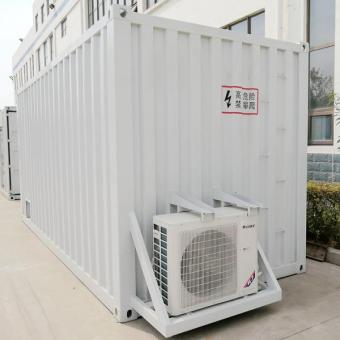
Adaptación personalizada a los escenarios: En combinación con su negocio de personalización de equipos eléctricos completos, estos armarios se pueden adaptar específicamente a diferentes escenarios:
(1) Escenarios de conservación de agua e hidroeléctrica: Adaptado para cargas fluctuantes de equipos como estaciones de bombeo y compuertas, con gabinetes personalizados resistentes a la humedad y la vibración, y combinado con módulos de monitoreo remoto para lograr operación no tripulada. Escenarios de fábricas industriales: Diseñado para grandes cargas inductivas de potencia como máquinas herramienta y compresores de aire, implementando estrategias de conmutación de grupos para compensar con precisión la potencia reactiva.
(2)Escenarios de edificios comerciales: Armarios compactos personalizados, adaptados al espacio limitado de las salas de distribución de edificios y combinados con módulos de control armónico para manejar cargas no lineales como ascensores y aires acondicionados.